What is the entrance fee for Flamenco Beach?
The wristband
You pay at the entrance and you get a wristband. Two independent local sources give the same figure and both describe it the same way, as a donation that is not optional. Nobody has ever explained the distinction to me in a way that changed what I hand over, so treat it as an entrance fee that happens to be called something else.
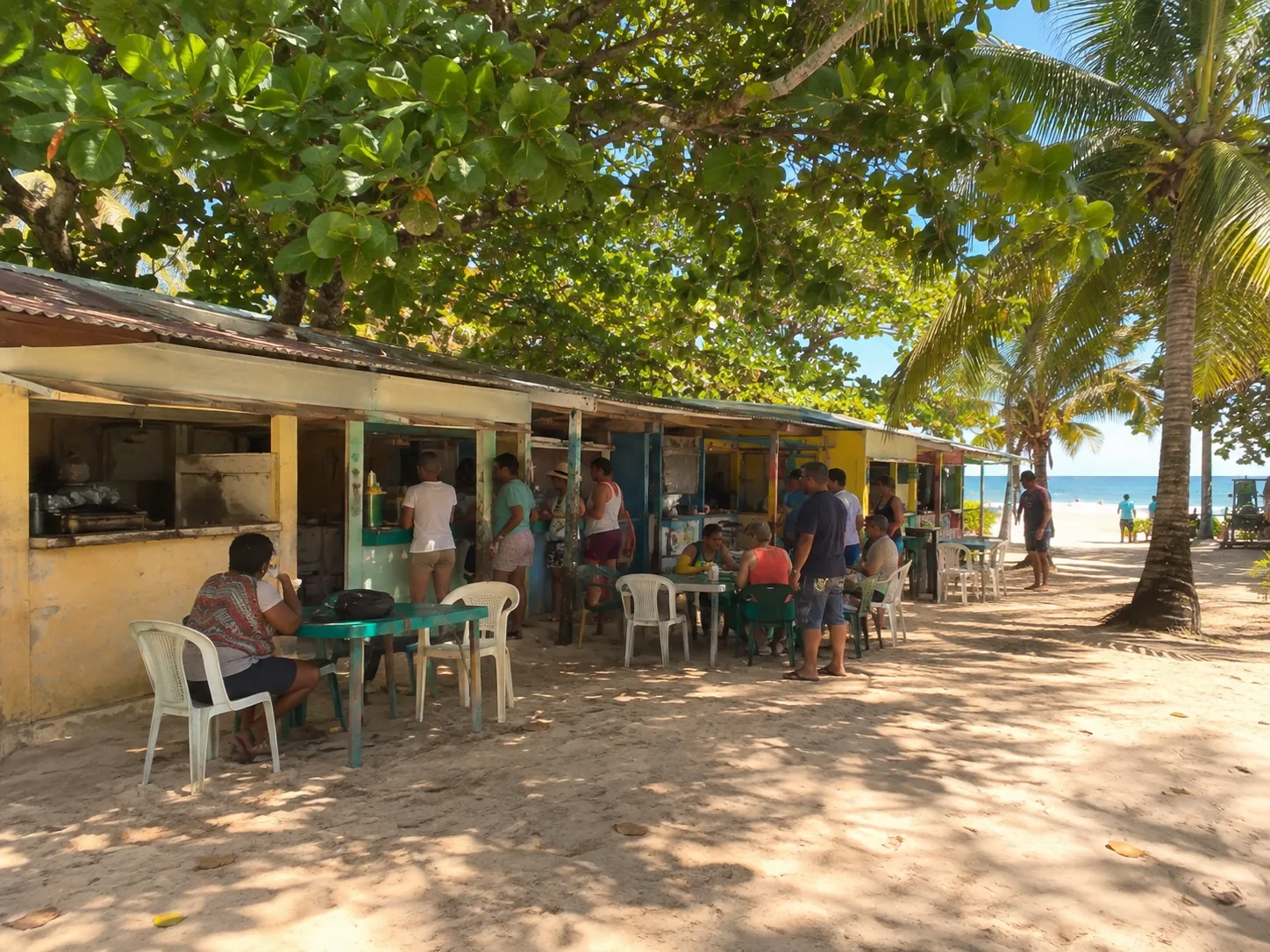
What the wristband buys you access to is a beach with lifeguards, restrooms, showers and changing areas, around six food kiosks, and chairs and umbrellas for hire. The restrooms are inconsistent. Local guides say so and I am not going to pretend otherwise on a page about what you are paying for.
Why “free” is the wrong word
Plenty of pages describe Flamenco as a free public beach. It is public, and a couple of dollars is about as close to free as a famous beach gets, but the sentence still sends people through a gate with no cash on them. Set the wristband against what else the day costs — pocket change for an adult ferry seat each way, a few dollars a head for the público from the dock — and you can see why nobody who has actually done the trip thinks the admission is the expensive part. What a day actually costs itemises the whole thing.
Parking, and what it does not cover
A few dollars per vehicle. Bicycles and e-bikes are free. I am not going to publish a figure for anything in between, because the two sources I trust on this island disagree with each other and a made-up number in your budget is worse than a gap.
Note also that you probably will not be arriving in your own car. Vehicle places on the ferry are restricted to residents of Culebra and Vieques by the operator’s own rule, which the ferry page goes through.
Do you still pay if you arrive by boat?
The wristband is per person, however you arrive. What I cannot tell you is whether the price of a particular boat trip already covers it, because no operator states that on its page and I am not going to guess on your behalf. Ask the crew before you step off, and carry the cash either way. The wider question of what those trips do and do not include is on the boat-or-ferry page.
If you are staying the night on the sand
Camping at Flamenco costs a modest nightly fee per tent, up to six people per tent, half price for people with disabilities, and seven nights maximum before you re-register. Cash, cards and ATH are accepted for that. You must reserve; the camping page has the rest.
I carry the wristband money in small bills and I have never once tried to pay it with a card. Bring cash for the day generally — the kiosks, the chairs, the ride back into town. This is an island of 1,792 people and the cash machine situation is not what you are used to.
Frequently asked questions
Is Flamenco Beach free?
Not quite. Entry is a couple of dollars per person, collected as a wristband at the entrance and described locally as a required donation. Everyone pays it however they arrive. Parking is a few dollars per vehicle and bicycles are free.
How much is parking at Flamenco Beach?
A few dollars per vehicle, with bicycles and e-bikes free. Sources disagree on the smaller vehicle categories, so this site publishes the one figure it trusts, in the key facts above, and stops there. Most visitors arrive without a vehicle anyway, since ferry car places are reserved for residents — see the ferry page.
Do you pay the entrance fee if you come on a boat tour?
The wristband is charged per person however you arrive. Whether a given operator has already covered it in the ticket price is not stated on any of their pages, so ask the crew and bring the cash. The boat-or-ferry page covers what those trips do and do not include.
What does the wristband actually get you?
A beach with lifeguards, restrooms, showers and changing areas, around six food kiosks and chairs and umbrellas for hire. Restroom cleanliness is inconsistent, which local guides say plainly and so do I. Swimming areas are marked with buoys — the swimming page has that.